The IRMCT Office of the Prosecutor (OTP) takes note of today’s appeal judgment in the Stanišić and Simatović case
The OTP is satisfied that the Appeals Chamber accepted our arguments that Stanišić and Simatović are criminally liable as participants in a joint criminal enterprise for a significant number of horrific crimes committed against innocent civilians. The Appeals Chamber confirmed that this joint criminal enterprise comprised, in addition to Stanišić and Simatović, many senior Serbian, Croatian Serb and Bosnian Serb political, military, and police leaders.
The Appeals Chamber dismisses Stanišić’s and Simatović’s appeals, reverses acquittals for joint criminal enterprise liability, and increases sentences to 15 years’ imprisonment
The Appeals Chamber of the Mechanism, composed of Judge Graciela Gatti Santana (Presiding), Judge Lee G. Muthoga, Judge Aminatta Lois Runeni N'gum, Judge Yusuf Aksar, and Judge Claudia Hoefer, delivered today its judgement on the appeals filed by Mr. Jovica Stanišić, Mr. Franko Simatović, and the Office of the Prosecutor (“Prosecution”) against the judgement in the case of Prosecutor v. Jovica Stanišić and Franko Simatović, pronounced on 30 June 2021 and filed in writing on 6 August 2021 by the Trial Chamber of the Mechanism.
Reflections of the Mechanism Principals and the President of the ADC-ICT on 30 years since the establishment of the ICTY
On the occasion of the Thirtieth Anniversary of the establishment of the International Criminal Tribunal for the former Yugoslavia (ICTY), the President, Prosecutor and Registrar of the International Residual Mechanism for Criminal Tribunals (Mechanism) reflected on the ICTY’s legacy and impact. Joining them was the President of the Association of Defence Counsel Practising before the International Courts and Tribunals (ADC-ICT).
ICTR Fugitive Fulgence Kayishema arrested
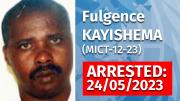
Yesterday afternoon, Fulgence Kayishema – one of the world’s most wanted genocide fugitives – was arrested in Paarl, South Africa in a joint operation by the IRMCT Office of the Prosecutor (OTP) Fugitive Tracking Team and South African authorities.
Kayishema is alleged to have orchestrated the killing of approximately 2000 Tutsi refugees – women, men, children and elderly – at the Nyange Catholic Church during the 1994 Genocide against the Tutsi in Rwanda. He has been at large since 2001.
Mechanism Information Programme launches Guide for History Teachers
Mechanism Prosecutor Brammertz on mission to the Republic of Croatia
Mechanism Prosecutor Brammertz on mission to Serbia
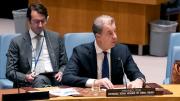
Chief Prosecutor of the International Residual Mechanism for Criminal Tribunals (Mechanism), Serge Brammertz is visiting Republic of Serbia from 20 to 21 April 2023, as part of preparations for his regular biannual report to the UN Security Council (UNSC).
The Prosecutor will meet with senior Serbian representatives to discuss cooperation between the Mechanism Office of the Prosecutor and Serbia, Serbian authorities’ efforts to achieve justice for war crimes, regional judicial cooperation in war crimes cases and the implementation of the National War Crimes Strategy.
President Gatti Santana concludes official visit to Rwanda on the occasion of Kwibuka29
The President of the International Residual Mechanism for Criminal Tribunals (Mechanism), Judge Graciela Gatti Santana, today concluded her official visit to the Republic of Rwanda (Rwanda). The visit took place on the occasion of the Twenty-Ninth Commemoration of the 1994 Genocide against the Tutsi in Rwanda (Kwibuka29).
President Gatti Santana participates in Commemoration Ceremony marking the Thirtieth Anniversary of crimes in Ahmići
Yesterday, the President of the International Residual Mechanism for Criminal Tribunals (Mechanism), Judge Graciela Gatti Santana, participated in an official Commemoration Ceremony marking the Thirtieth Anniversary of crimes committed in Ahmići, Bosnia and Herzegovina.
President Gatti Santana delivered remarks at the Commemoration Ceremony, alongside a number of dignitaries and representatives of victims’ associations, and afterwards paid her respects to the victims of the crimes by laying flowers in their honour.