
bikosi

Introduction
This section provides an overview of the cases before the ICTY concerning the crimes committed in Bikoši, Bosnia and Herzegovina, in 1992. It also contains a selection of archival material and the videos produced by the Mechanism Information Programme for Affected Communities (MIP).
Evidence of the crimes committed in Bikoši was heard in two ICTY cases. While the accused were not ultimately convicted of these particular crimes, ICTY trial chambers established beyond reasonable doubt that the crimes had been committed. However, the accused were convicted of other crimes charged in the indictments.
Selected Case Information
Rasim Delić (IT-04-83)
Case Information Sheet │ Selected Documents
Enver Hadžihasanović & Amir Kubura (IT-01-47)
Case Information Sheet │ Selected Documents
Selected Archive Material
The selected archive material contains a compilation of audiovisual material admitted into evidence in various ICTY trials related to crimes committed in Višegrad, Bosnia and Herzegovina from April until June 1992. When using Mechanism's archive material, please use the following credit: “Footage courtesy of IRMCT”. For third-party content, please seek permission from the content owner.
To download the selected archive material via Microsoft OneDrive please follow this link.
Videos produced by the MIP
Remember Bikoši Victims
“Every night, I am back on the battlefield. I can no longer sleep.ˮ
These words were spoken before the ICTY by a survivor of the crimes committed near Bikoši, a village in Central Bosnia, on 8 June 1993. At least 24 Bosnian Croats were killed after being separated from a larger group of civilians and soldiers captured near Travnik.
More than three decades later, the testimonies of survivors and others continue to remind us of the suffering caused by crimes committed during the conflicts in the former Yugoslavia. Along with the judicially established facts, their stories are preserved in the archives of the ICTY and its successor, the IRMCT, helping to ensure that the experiences of victims and survivors remain part of the historical record.
The IRMCT honours the memory of those who were killed and the resilience of those who survived.
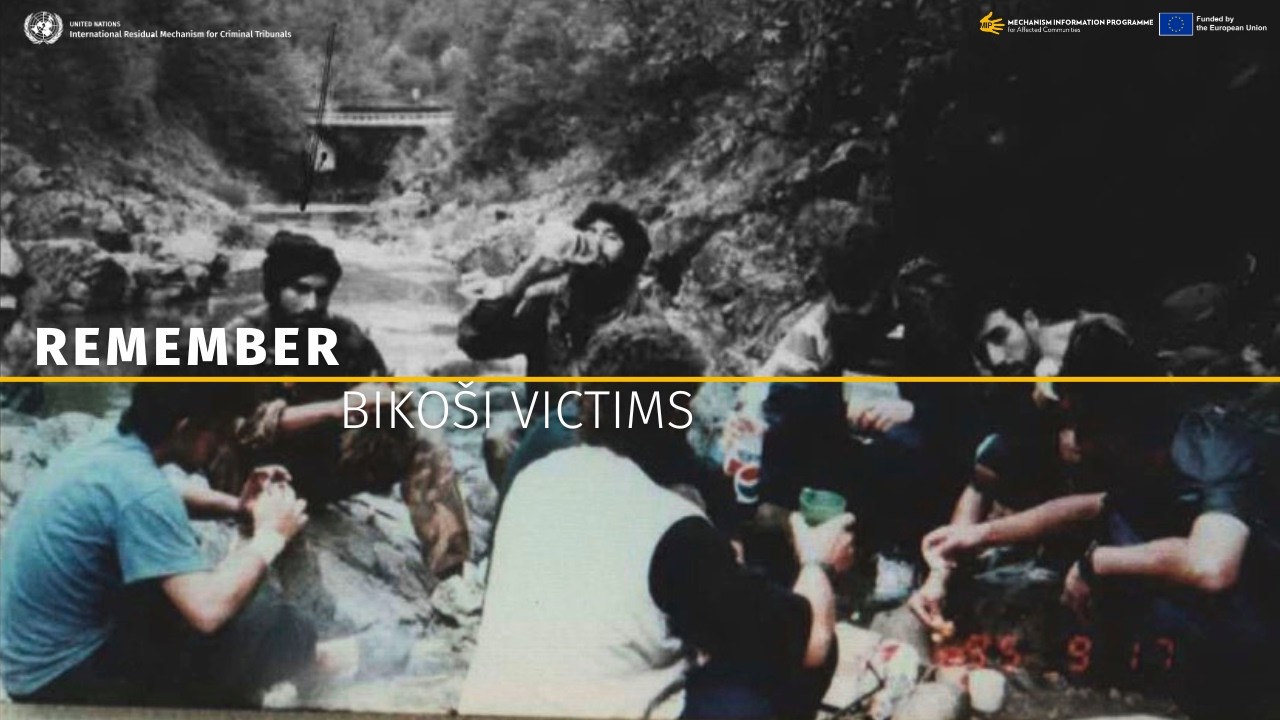
Remember Bikoši Victims
×