
MIP holds workshop and launches Macedonian translation of Guide for History Teachers in Skopje
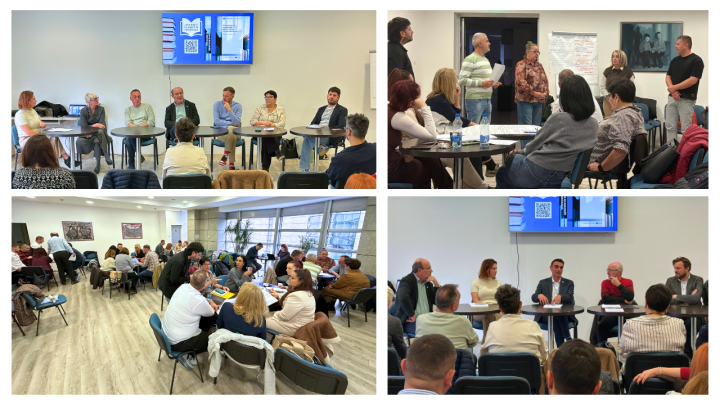
On 30 and 31 October 2026, the Mechanism’s Information Programme for Affected Communities (MIP), in cooperation with the Association of History Teachers of North Macedonia (ANIM) and the European Association of History Teachers (EuroClio), organised a workshop entitled “Using the Tribunal and Mechanism Archives to Develop Teaching Materials” at the Holocaust Memorial Center for the Jews of Macedonia in Skopje.
The workshop brought together history teachers and education experts from across the Western Balkans to explore how archival material from the International Criminal Tribunal for the former Yugoslavia (ICTY) and the International Residual Mechanism for Criminal Tribunals (Mechanism) can be used to develop teaching materials on the conflicts of the 1990s in the former Yugoslavia.
The first day featured the launch of the Macedonian-language edition of MIP’s three-volume Guide for History Teachers. This was followed by a panel discussion in which the Guide’s authors and editors shared their experiences and discussed the use of archival materials in developing educational resources. The panel also featured history teachers, the authors of the Guide, from across the region: Arna Daguda-Torlaković (Bosnia and Herzegovina), Nataša Kostić (Serbia), Igor Jovanović (Croatia), Igor Radulović (Montengro) and Mire Mladenovski (North Macedonia), as well as editor of the Guide Rodoljub Jovanović. The discussion was moderated by Rada Pejić-Sremac, MIP Coordinator.
A second panel examined the role of judicial archives in history education, including how judicially established facts and court records can support critical thinking and a deeper understanding of the region’s recent past. The panel featured Rada Pejić-Sremac; Steven Stegers, Director of EuroClio; Todor Čepreganov, historian and Professor of Contemporary History at Goce Delčev University in Štip; and Goran Sadikario, Director of the Holocaust Memorial Center for the Jews of Macedonia. The discussion was moderated by Mire Mladenovski, President of ANIM.
The first day also included a working meeting to conclude the ongoing project and discuss priorities for future cooperation.
On the second day, 25 history teachers from across North Macedonia participated in practical sessions on using ICTY and Mechanism archives to develop educational materials. MIP researcher Nemanja Stjepanović presented on the significance of the ICTY archives for understanding the conflicts of the 1990s, while educational expert Rodoljub Jovanović explored approaches to using the Guide for History Teachers to develop classroom resources.
The Guide’s authors and trainers also presented selected topics and historical sources, discussing their potential application in history teaching. Working in groups with support from the trainers, participants developed lesson plans and teaching materials based on ICTY and Mechanism archives. The workshop concluded with presentations of the materials, discussion and an exchange of feedback on incorporating archival evidence and judicially established facts into history education.
Through initiatives such as this workshop, MIP supports history educators in developing engaging, evidence-based teaching materials that promote a more informed understanding of the conflicts of the 1990s, the crimes committed and their adjudication before the ICTY and the Mechanism.
The workshop forms part of MIP’s broader efforts to improve knowledge and understanding among communities in the countries of the former Yugoslavia of the crimes committed during the conflicts of the 1990s, as established in ICTY and Mechanism cases. MIP is funded by the European Union.
On 30 and 31 October 2026, the Mechanism’s Information Programme for Affected Communities (MIP), in cooperation with the Association of History Teachers of North Macedonia (ANIM) and the European Association of History Teachers (EuroClio), organised a workshop entitled “Using the Tribunal and Mechanism Archives to Develop Teaching Materials” at the Holocaust Memorial Center for the Jews of Macedonia in Skopje.
The workshop brought together history teachers and education experts from across the Western Balkans to explore how archival material from the International Criminal Tribunal for the former Yugoslavia (ICTY) and the International Residual Mechanism for Criminal Tribunals (Mechanism) can be used to develop teaching materials on the conflicts of the 1990s in the former Yugoslavia.
The first day featured the launch of the Macedonian-language edition of MIP’s three-volume Guide for History Teachers. This was followed by a panel discussion in which the Guide’s authors and editors shared their experiences and discussed the use of archival materials in developing educational resources. The panel also featured history teachers, the authors of the Guide, from across the region: Arna Daguda-Torlaković (Bosnia and Herzegovina), Nataša Kostić (Serbia), Igor Jovanović (Croatia), Igor Radulović (Montengro) and Mire Mladenovski (North Macedonia), as well as editor of the Guide Rodoljub Jovanović. The discussion was moderated by Rada Pejić-Sremac, MIP Coordinator.
A second panel examined the role of judicial archives in history education, including how judicially established facts and court records can support critical thinking and a deeper understanding of the region’s recent past. The panel featured Rada Pejić-Sremac; Steven Stegers, Director of EuroClio; Todor Čepreganov, historian and Professor of Contemporary History at Goce Delčev University in Štip; and Goran Sadikario, Director of the Holocaust Memorial Center for the Jews of Macedonia. The discussion was moderated by Mire Mladenovski, President of ANIM.
The first day also included a working meeting to conclude the ongoing project and discuss priorities for future cooperation.
On the second day, 25 history teachers from across North Macedonia participated in practical sessions on using ICTY and Mechanism archives to develop educational materials. MIP researcher Nemanja Stjepanović presented on the significance of the ICTY archives for understanding the conflicts of the 1990s, while educational expert Rodoljub Jovanović explored approaches to using the Guide for History Teachers to develop classroom resources.
The Guide’s authors and trainers also presented selected topics and historical sources, discussing their potential application in history teaching. Working in groups with support from the trainers, participants developed lesson plans and teaching materials based on ICTY and Mechanism archives. The workshop concluded with presentations of the materials, discussion and an exchange of feedback on incorporating archival evidence and judicially established facts into history education.
Through initiatives such as this workshop, MIP supports history educators in developing engaging, evidence-based teaching materials that promote a more informed understanding of the conflicts of the 1990s, the crimes committed and their adjudication before the ICTY and the Mechanism.
The workshop forms part of MIP’s broader efforts to improve knowledge and understanding among communities in the countries of the former Yugoslavia of the crimes committed during the conflicts of the 1990s, as established in ICTY and Mechanism cases. MIP is funded by the European Union.