
MIP participates in Transitional Justice Academy in Pula
From 8 to 11 October 2026, the Mechanism Information Programme for Affected Communities (MIP) participated in the Transitional Justice Academy organized by SENSE – Centre for Transitional Justice in Pula, Croatia. The Academy brought together students and young professionals from Bosnia and Herzegovina, Croatia, and Serbia for a programme focused on transitional justice, war crimes trials, archives, and the ways in which narratives about the conflicts of the 1990s are shaped and shared.
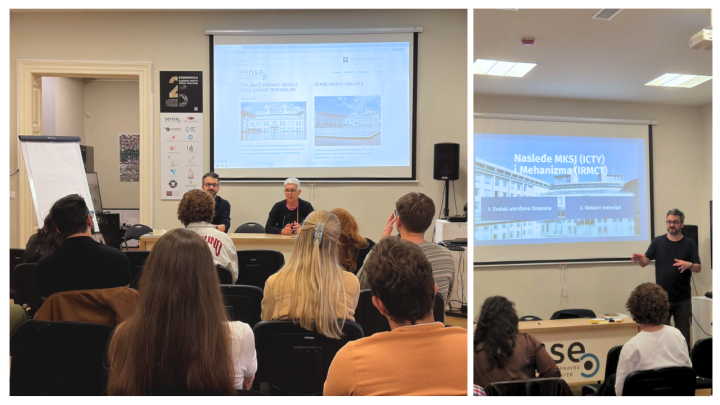
MIP researcher Mr. Nemanja Stjepanović contributed to the programme with sessions introducing participants to war crimes trials before the International Criminal Tribunal for the former Yugoslavia (ICTY) and the International Residual Mechanism for Criminal Tribunals (Mechanism). He also presented the ICTY/Mechanism archives and their significance for research, education, and the preservation of the Tribunal’s legacy.
Through practical sessions, participants explored how to conduct archival research and use documentary material to examine judicially established facts about crimes committed during the conflicts in the former Yugoslavia. The sessions also highlighted the value of the Mechanism’s archival resources in supporting a deeper understanding of the cases prosecuted before the ICTY/Mechanism and the evidence underpinning their findings.
The Academy’s wider programme addressed the construction of narratives about the conflicts in Croatia, Serbia, and Bosnia and Herzegovina, the use of archives in journalism and digital environments, and the potential applications of artificial intelligence in transitional justice. By combining expert presentations, practical workshops, and discussions, the Academy provided participants with an opportunity to explore different approaches to documenting the past and engaging with its legacy.
This lecture forms part of the MIP’s efforts to support projects and events organized by civil society organizations from the former Yugoslavia engaged in the field of transitional justice.
The aim of the MIP is to improve the knowledge and understanding of citizens and communities in the countries of the former Yugoslavia about the crimes committed during the conflicts of the 1990s, based on ICTY and Mechanism cases.
The MIP is funded by the European Union.
From 8 to 11 October 2026, the Mechanism Information Programme for Affected Communities (MIP) participated in the Transitional Justice Academy organized by SENSE – Centre for Transitional Justice in Pula, Croatia. The Academy brought together students and young professionals from Bosnia and Herzegovina, Croatia, and Serbia for a programme focused on transitional justice, war crimes trials, archives, and the ways in which narratives about the conflicts of the 1990s are shaped and shared.
MIP researcher Mr. Nemanja Stjepanović contributed to the programme with sessions introducing participants to war crimes trials before the International Criminal Tribunal for the former Yugoslavia (ICTY) and the International Residual Mechanism for Criminal Tribunals (Mechanism). He also presented the ICTY/Mechanism archives and their significance for research, education, and the preservation of the Tribunal’s legacy.
Through practical sessions, participants explored how to conduct archival research and use documentary material to examine judicially established facts about crimes committed during the conflicts in the former Yugoslavia. The sessions also highlighted the value of the Mechanism’s archival resources in supporting a deeper understanding of the cases prosecuted before the ICTY/Mechanism and the evidence underpinning their findings.
The Academy’s wider programme addressed the construction of narratives about the conflicts in Croatia, Serbia, and Bosnia and Herzegovina, the use of archives in journalism and digital environments, and the potential applications of artificial intelligence in transitional justice. By combining expert presentations, practical workshops, and discussions, the Academy provided participants with an opportunity to explore different approaches to documenting the past and engaging with its legacy.
This lecture forms part of the MIP’s efforts to support projects and events organized by civil society organizations from the former Yugoslavia engaged in the field of transitional justice.
The aim of the MIP is to improve the knowledge and understanding of citizens and communities in the countries of the former Yugoslavia about the crimes committed during the conflicts of the 1990s, based on ICTY and Mechanism cases.
The MIP is funded by the European Union.