

About the 1995 Genocide in Srebrenica
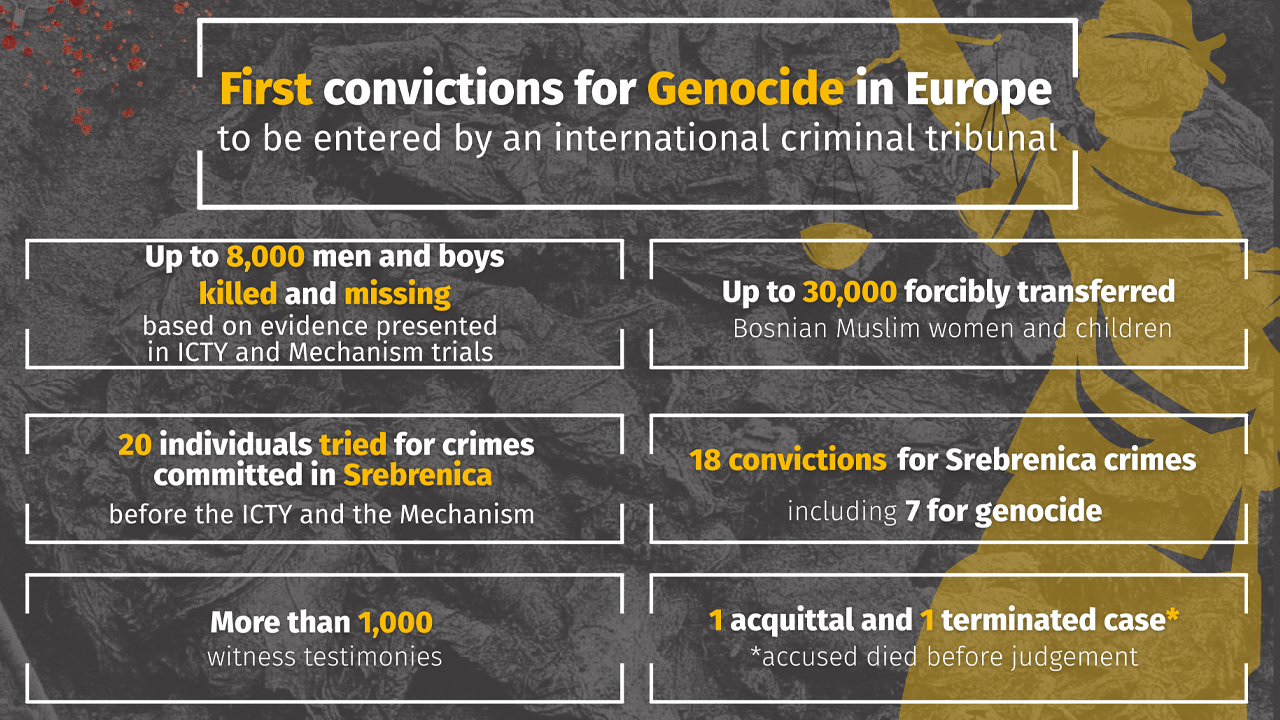
The 1995 Genocide in Srebrenica took place during the conflict in Bosnia and Herzegovina (1992–1995), the most violent of the conflicts following the breakup of the former Yugoslavia. In eastern Bosnia, where Srebrenica is located, widespread atrocities were committed primarily against Bosnian Muslims in the context of efforts by Bosnian Serb forces to establish ethnically homogeneous territories. This broader campaign of violence set the stage for the Genocide in Srebrenica.
In late 1992, the town of Srebrenica became an enclave controlled by the Army of the Republic of Bosnia and Herzegovina, largely made up of Bosnian Muslims. As Bosnian Serb forces attacked surrounding areas, tens of thousands of Bosnian Muslims sought refuge there. Srebrenica soon faced severe overcrowding, worsened by Bosnian Serb forces’ attacks on its water supply and the blocking of humanitarian aid, leading to extreme shortages of food, water, medicine, and shelter.
On 16 April 1993, the United Nations Security Council adopted Resolution 819, declaring Srebrenica a “safe area” due to the worsening humanitarian crisis. A cease-fire followed on 18 April, with plans to demilitarize the enclave under United Nations Protection Force (UNPROFOR) supervision. UNPROFOR set up a small base in Srebrenica and a larger compound in nearby Potočari. However, these protection efforts proved insufficient.
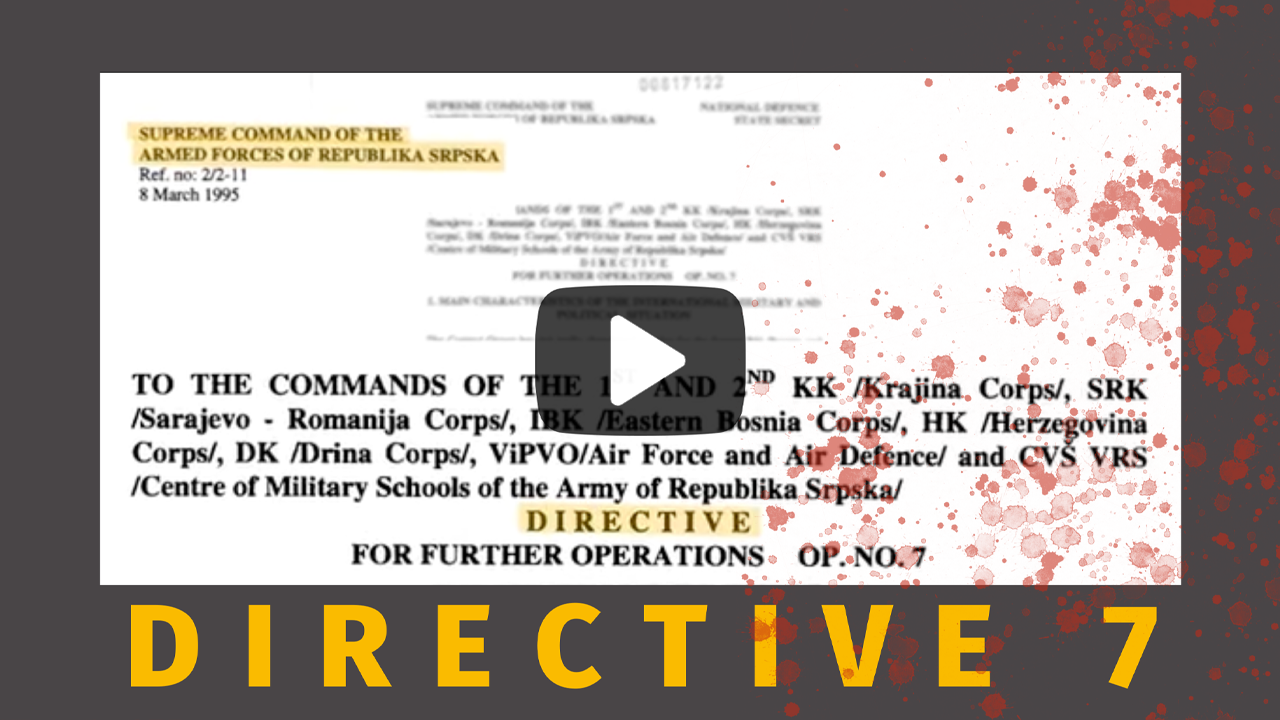
In March 1995, Radovan Karadžić, President and Supreme Commander of the armed forces of the self-proclaimed Republika Srpska, issued Directive 7, instructing Bosnian Serb forces to create an unbearable situation of total insecurity with no hope of further survival or life for the inhabitants of Srebrenica. This directive laid the groundwork for the subsequent military operation.
In early July 1995, Bosnian Serb forces under General Ratko Mladić launched “Krivaja 95”, ultimately capturing Srebrenica on 11 July. Following the takeover, up to 8,000 Bosnian Muslim men and boys were killed or went missing, while around 30,000 women, children, and elderly were forcibly transferred. The killings were systematic, with men and boys separated from their families, detained, and executed at multiple sites. To hide the crimes, many bodies were later moved and reburied in secondary and tertiary mass graves.
The International Criminal Tribunal for the former Yugoslavia (ICTY) and the International Court of Justice (ICJ) both ruled that the events in Srebrenica constituted genocide. The ICTY and its legal successor, the International Residual Mechanism for Criminal Tribunals (IRMCT), tried 20 individuals for crimes committed in connection with the 1995 Genocide in Srebrenica. A total of 18 persons – including high-level officials such as Radislav Krstić, Ratko Mladić, and Radovan Karadžić – were convicted, seven of them for genocide.
Those who devise and implement genocide seek to deprive humanity of the manifold richness its nationalities, races, ethnicities and religions provide. This is a crime against all of humankind, its harm being felt not only by the group targeted for destruction, but by all of humanity.
Krstić Appeal Judgement (19 April 2004)
CASES
The ICTY and the IRMCT tried 20 individuals for crimes committed in connection with the 1995 Genocide in Srebrenica. Below you can find links to brief summaries of the Srebrenica-related cases that led to final judgements. The case against the former President of Serbia, Slobodan Milošević, is not included as it was terminated following his death.
Radislav Krstić
Srebrenica established as genocide
The trial of Radislav Krstić, a Bosnian Serb army general, made history as the first judgement of the Tribunal affirming that criminal acts committed in Srebrenica in 1995 constituted inter alia the crime of genocide.
The Trial Chamber found that Bosnian Serb forces subjected the Bosnian Muslim refugees taking shelter in and around the UN compound at Potočari to a terror campaign of threats, insults, looting, burning of nearby houses, beatings, rapes and murders. Thousands of Bosnian Muslim men and boys were separated from their families and ultimately executed by Bosnian Serb forces at various locations.
The Judges were convinced beyond a reasonable doubt that the crime of genocide had occurred in Srebrenica. Taking into account the horrific nature of the atrocities, reading the judgement aloud, Presiding Judge Almiro Rodrigues directly addressed the Accused, declaring that: “… in July 1995, General Krstić, you agreed to evil.”
The Trial Chamber thus found Krstić guilty of genocide, crimes against humanity and violations of the law and customs of war.
The Appeals Chamber partly reversed that Judgement in April 2004. The Appeals Chamber affirmed the Trial Chamber’s finding that “genocide was committed in Srebrenica”, but held that Krstić personally lacked genocidal intent and was thus guilty of “aiding and abetting genocide”, rather than directly perpetrating genocidal acts himself. The Appeals Chamber consequently sentenced him to 35 years’ imprisonment.
Vujadin Popović et al.
The largest case regarding Srebrenica-related crimes
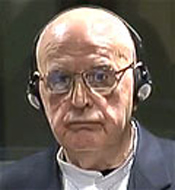
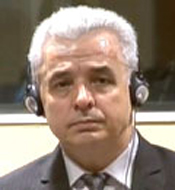
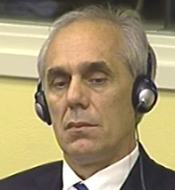
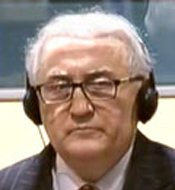
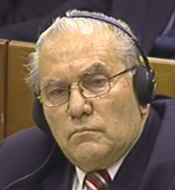
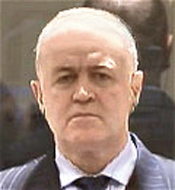
In the largest case - in terms of the number of accused - heard by the Tribunal, seven former high-ranking military and police Bosnian Serb officers were convicted for crimes following the take-over of the protected areas of Srebrenica and Žepa. The case of Vujadin Popović and others was the third case to establish that the crime of genocide was committed in Srebrenica.
The ICTY found that two joint criminal enterprises (JCE) existed in Eastern Bosnia in July 1995: the JCE to murder the able-bodied Bosnian Muslim men from Srebrenica and the JCE to forcibly remove the Bosnian Muslim population from Srebrenica and Žepa.
More specifically, the Trial Chamber found that VujadinPopović “knew that the intent was not just to kill those who had fallen into the hands of the Bosnian Serb Forces, but to kill as many as possible with the aim of destroying the group. Popović’s ensuing robust participation in all aspects of the plan demonstrates that he not only knew of this intent to destroy, he also shared it.” The Appeals Chamber affirmed that determination.
Popović, like Ljubiša Beara, was sentenced to life imprisonment for genocide, conspiracy to commit genocide, crimes against humanity and violations of the laws or customs of war.
Their co-accused Drago Nikolić, Vinko Pandurević, Radivoje Miletić, Ljubiša Borovčanin and Milan Gvero were sentenced to terms ranging from 5 years to 35 years’ imprisonment.
Zdravko Tolimir
The third life sentence for Srebrenica-related crimes
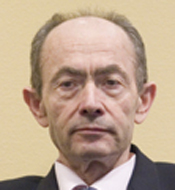
ICTY Judges, both at trial and on appeal, found that Zdravko Tolimir, a senior official of the Bosnian Serb army, participated in two joint criminal enterprises (JCE): the JCE to murder the able-bodied Bosnian Muslim men from Srebrenica, and the JCE to forcibly remove the Bosnian Muslim population from Srebrenica and Žepa. The Trial Judgement read in court stated that the crimes committed were “massive in scale, severe in their intensity, anddevastating in their effect.”
The Judges further found that Tolimir had knowledge of the genocidal intent of the other members of the JCE to murder Srebrenica’s male population, including the intent of his subordinate security and intelligence organs involved in carrying out the murder operation. In addition, the Tribunal established that Tolimir not only had knowledge of the genocidal intent of others, but also possessed it himself.
Tolimir was found guilty of genocide, conspiracy to commit genocide, crimes against humanity, and violations of the laws or customs of war. He was the third ICTY accused to be sentenced to life imprisonment for Srebrenica-related crimes. This was also the fourth ICTY case to establish that genocide was committed in Srebrenica.
Vidoje Blagojević and Dragan Jokić
Practical assistance to Srebrenica-related crimes
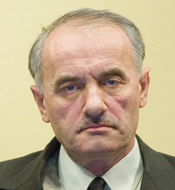
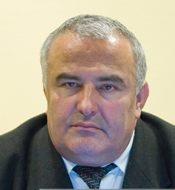
Vidoje Blagojević, Dragan Jokić, Momir Nikolić and Dragan Obrenović – all officers of the Bosnian Serb army - were charged with crimes related to the atrocities committed in Srebrenica. Nikolić and Obrenović were separated fromthe proceedings after pleading guilty (see below). They later testified for the Prosecution against Blagojević and Jokić.
The Trial Chamber found that there had been “ acts committed by Colonel Blagojević or members ofthe Bratunac Brigade which provided practical assistance to the murder operation that resulted in the death of more than 7,000 Bosnian Muslim men and boys.” Blagojević was found guilty of aiding and abetting the persecutions of the Bosnian Muslim population in the Srebrenica enclave through underlying acts of murder, cruel and inhumane treatment, terrorising the civilian population and forcible transfer as crimes againsth umanity. He was also convicted of aiding and abetting the murder of Bosnian Muslim men in nearby Bratunac as a crime against humanity and as violation of the laws or customs of war.
It was also found that Jokić aided and abetted the murders of Bosnian Muslim men committed at Orahovac, Pilica/Branjevo military farm and Kozluk by providing machinery and equipment such as loaders and excavators, as well as personnel to dig mass graves to bury the bodies of the executed men. By aiding and abetting murder as a crime against humanity, Jokić also participated in a campaign of persecution against the Bosnian Muslim population.
Blagojević and Jokić were sentenced to 15 and 9 years’ imprisonment respectively for crimes against humanity and war crimes.
Dražen Erdemović, Momir Nikolić and Dragan Obrenović
Statements of guilt for Srebrenica-related crimes
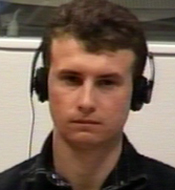
Dražen Erdemović was a soldier in the 10th Sabotage detachment of the Bosnian Serb Army in July 1995. He was found to have participated in the executions of hundreds of unarmed Bosnian Muslim men and boys from the Srebrenica enclave.
Erdemović was the first person to enter a guilty plea atthe Tribunal. He later testified as a witness in separate trials providing significant and detailed evidence about the crimes committed in the Srebrenicaarea. Erdemović read his statement of guilt before ICTY Judges on 29 Nov. 1996. He was sentenced to5 years’ imprisonment.
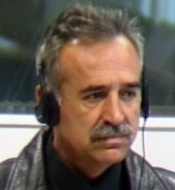
Momir Nikolićw as an Assistant Commander for Security and Intelligencein the Bosnian Serb army. Due to his position, he was atthe centre of the crimes that took place following the fall of Srebrenica.
It was found that Nikolić did not raise any objections when informed of the plan to deport the Muslim women, children and elderly and to separate, detain andultimately kill the Muslim men. It was also found thatNikolić did nothing to stop the beatings, humiliation and the killing of thousands of Bosnian Muslim men, and personally co-ordinated the exhumation and re-burial ofvictims’ bodies.
Nikolićread his statement of guilt before ICTY Judges on 29 October 2003. He testified inother proceedings before the Tribunal, including thetrial of his two co-accused Blagojević and Jokić. Nikolić was sentenced to 20 years’ imprisonment.

Dragan Obrenović, was a senior officer and commander within the Bosnian Serb army in July 1995. Following his guilty plea, he was convicted for persecutions carried out through the murder of hundreds of Bosnian Muslim civilians, committed in and around Srebrenica.
Obrenovićread his statement of guiltbefore ICTY Judges on 30 Oct. 2003, Following the terms of his plea agreement, he testified in other proceedings before the Tribunal, including those trials related to Srebrenica. Obrenović was sentenced to 17 years’ imprisonment.
Momčilo Perišić
The only acquittal for Srebrenica-related crimes
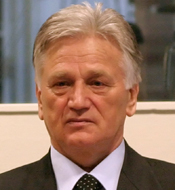
Momčilo Perišić was the Chief of the General Staff of the Yugoslav Army. His indictment included crimes committed in Srebrenica, Sarajevo and Zagreb.
The Trial Chamber found Perišić guilty for the majorityof the crimes alleged in the indictment and sentenced him to 27 years’ imprisonment. Later, the AppealsChamber decided that the evidence did not prove beyond areasonable doubt that he specifically directed assistance towards the crimes committed by the Bosnian Serb army in Srebrenica. Perišić was acquitted in 2013.
This has been the first and only acquittal handed downby the Tribunal in relation to crimes committed in Srebrenica during the summer of 1995.
Radovan Karadžić
Life sentence for the former president of Republika Srpska
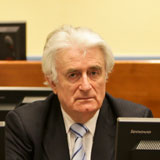
Radovan Karadžić was the wartime President and Supreme Commander of the armed forces of Republika Srpska. The ICTY convicted Karadžić of genocide, crimes against humanity and violations of the laws or customs of war committed by Serb forces during the armed conflict in Bosnia and Herzegovina from 1992 until 1995. In particular, he was convicted of, inter alia, genocide in Srebrenica, as well as persecution, extermination, murder, deportation, inhumane acts (forcible transfer),terror, unlawful attacks on civilians, and hostage-taking. The Trial Chamber sentenced Karadžić to 40 years of imprisonment.
With respect to Srebrenica, the Trial Chamber found thatK aradžić participated in a joint criminal enterprise to eliminate the Bosnian Muslims in Srebrenica in July 1995, through the forcible removal of Bosnian Muslim women, children, and elderly men and the killing of Bosnian Muslim able-bodied men and boys. The Trial Chamber also found Karadžić responsible as a superior inrelation to certain killings committed by his subordinates. The Trial Chamber, having taken into account Karadžić’s position as President of Republika Srpska and Supreme Commander of its armed forces, found that he was “the sole person within Republika Srpska with the power to intervene to prevent the Bosnian Muslim males from being killed”.
Following the Trial Judgment and closure of the ICTY,the appeals proceedings in the Karadžić case were conducted before the IRMCT . In March 2019, the Appeals Chamber of the IRMCT rendered its Appeal Judgement. The Appeals Chamber upheld Karadžić’s convictions for genocide in Srebrenica, crimes against humanity, and violations of laws or customs of war, but considered that that the 40-year sentence imposed by the Trial Chamber was inadequate. The Appeals Chamber considered that this sentence underestimated the extraordinary gravity of Karadžić’s responsibility and his integral participation in “the most egregious of crimes”, which were committed throughout the entire period of the conflict in Bosnia and Herzegovina and were noted for their “sheer scale” and “systematic cruelty”. Consequently, Karadžić’s sentenced was increased to life imprisonment.
Radovan Karadžić remains in the custody of the IRMCT pending the finalization of arrangements for hist ransfer to a State where he will be serving hissentence.
Ratko Mladić
Life sentence for the former Commander of the Main Staff of the Bosnian Serb Army
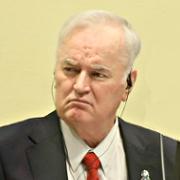
Ratko Mladić was appointed Commander of the Main Staff of the army of the Serbian Republic of Bosnia and Herzegovina (“VRS”) on 12 May 1992. He remained in command of the VRS Main Staff until at least 8 November 1996.
The ICTY Trial Chamber convicted Mladić of genocide in the area of Srebrenica in 1995 and of persecution, extermination, murder, deportation, inhumane acts (forcible transfer), terror, unlawful attacks on civilians and the taking of hostages. Mladić was acquitted of the charge of genocide in six of the municipalities in BiH in 1992.
The Appeals Chamber affirmed Mladić’s convictions for genocide, crimes against humanity and violations of the laws or customs of war, as well as the sentence of life imprisonment imposed by the Trial Chamber.
Jovica Stanišić and Franko Simatović
The only conviction of Serbian officials for crimes related to Srebrenica
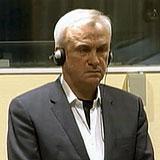
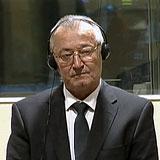
Jovica Stanišić was the Head of the State Security Service ("Državna bezbednost" or "DB") of the Ministry of Internal Affairs of the Republic of Serbia ("Ministarstvo unutrašnjih poslova" or "MUP").
Franko Simatović was employed in the Second administration of the DB of the MUP.
The Mechanism Trial Chamber found Jovica Stanišić and Franko Simatović responsible for aiding and abetting the crime of murder, as a violation of the laws or customs of war and a crime against humanity, and the crimes of deportation, forcible transfer, and persecution, as crimes against humanity, committed by Serb forces following the takeover of Bosanski Šamac in April 1992. They were sentenced to 12 years of imprisonment each.
The Appeals Chamber dismissed Stanišić’s and Simatović’s appeals, reversed their acquittals for joint criminal enterprise liability, and increased their sentences to 15 years of imprisonment each.
Media
Audio/Video Material
A compilation of audio-visual material admitted into evidence in various ICTY/IRMCT trials related to genocide and other crimes committed in Srebrenica in July 1995 is available for use for the media.
It can be downloaded from our OneDrive account. You can also download a compressed version.
Trial and Appeal Judgement Videos
A compiled playlist of all trial and appeal judgments of Srebrenica-related cases before the ICTY and the IRMCT is available for viewing and download.
When using IRMCT's archive material, please use the following credit: Footage courtesy of IRMCT. For third-party content, please seek permission from the content owner.
Photography
A Flickr gallery of Srebrenica-related photography is also available. Please check each photograph for copyright and photo credit information.